Pulse · Behind the coach
Why “set it up” is a hard sentence for an AI running coach
How RunCadence’s AI running coach uses conversation context to reschedule a workout, check your training plan and confirm a saved change.
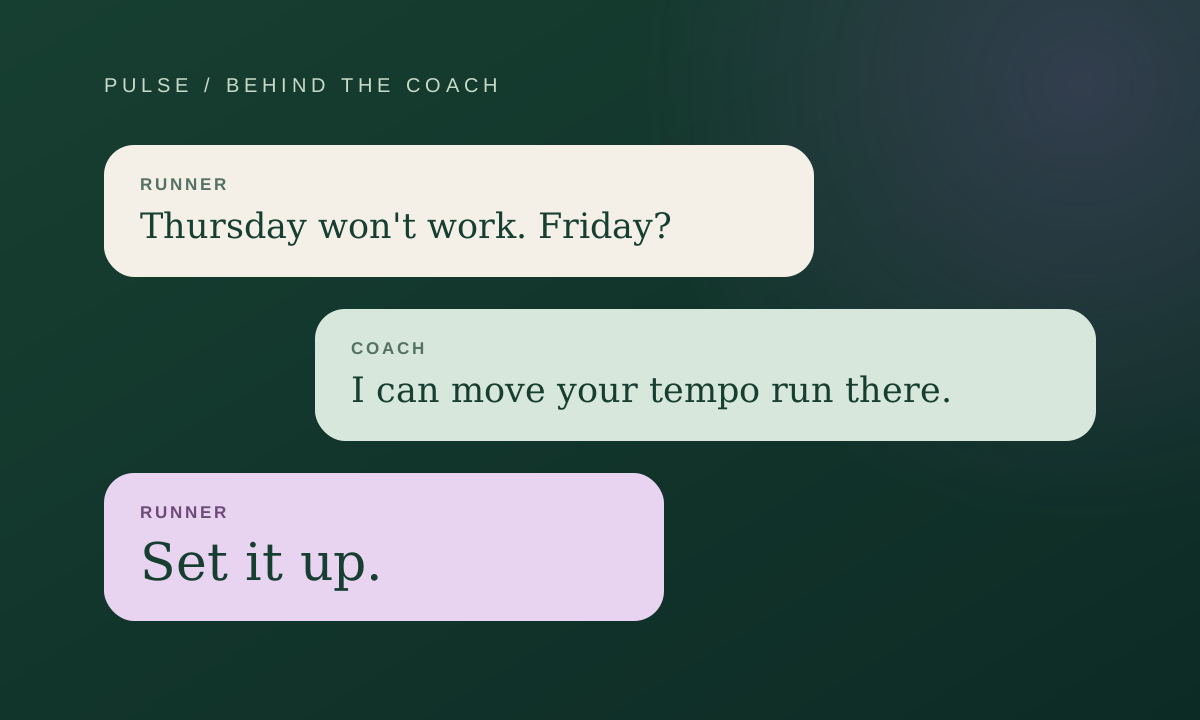
You have just talked through a change to your training week. Your coach suggests moving a session. You reply: “Set it up.”
For another person, that is enough. They know which session you mean, where it should go, and that you have agreed to the change. For an AI coach, those three words are a surprisingly demanding test.
Consider this example. It is an illustration, not a transcript from a runner:
Runner: “Thursday’s tempo run clashes with work. Could I do it on Friday?”
Coach: “Friday looks possible. I can move Thursday’s tempo run there. Want me to set that up?”
Runner: “Set it up.”
The last message contains no date, session name, or instruction to move anything. Its meaning lives in the two turns before it. If the coach treats it as an isolated request, it has to guess. If it only remembers its own answer, it might mistake a suggestion for a change that has already happened.
How an AI running coach keeps track of a plan change
We built RunCadence’s coach to keep the recent exchange together, including the runner’s words and the coach’s question. If the relevant detail sits further back in the same conversation, the coach can look up earlier visible messages. A short answer to a question such as “Friday or Saturday?” stays connected to that question on the next turn.
That lets “set it up” point back to this tempo run and this proposed Friday. It also lets the coach ask a focused question when there are two plausible sessions, instead of quietly choosing one.
From a suggested workout change to a saved plan
The conversation tells the coach what you mean. The current training plan tells it what is actually there. Before changing a session, the coach needs to check the live plan and whether the requested move is possible. Afterward, it should say the change is done only if it was saved.
That distinction matters. “I can move it” is a proposal. “I moved it” is a claim about your plan. We want the second sentence to depend on a real result, not on how confident the first one sounded.
This is the kind of continuity we care about: you can talk to your running coach like a person, without restating the entire week in every message, while still knowing when it needs one more detail. Sometimes the most useful answer really is: “Which Friday session do you mean?”
Using RunCadence? See how to move a session and adjust your training week, or create your first personalized running plan.